Dev Journal
The Uncanny Prototype Valley
The Closer Your Get to Production, The Easier It Is for Players to See the Issues
Oct 15, 2025
The term "uncanny valley" is most often used in reference to robotics and CGI. The idea is that the closer something gets to the resemblance of a human, the stronger our "uncanny" (odd, eerie) feelings are towards that thing.
I feel the same is true when it comes to prototypes. That is, the closer you get to your production/release version, the more glaring the issues become. I've spoken with several designers and some of the best reactions to a game come early on in its development: long before the images are polished or the gameboard aesthetics are finalized and clean. If I had to guess, this is primarily because the players don't have all those polished pieces to focus on. They're learning the game, understanding it, providing feedback, and maybe some helpful critiques. Good early playtests won't really focus on the smaller issues unless they're truly detrimental to the gameplay itself.
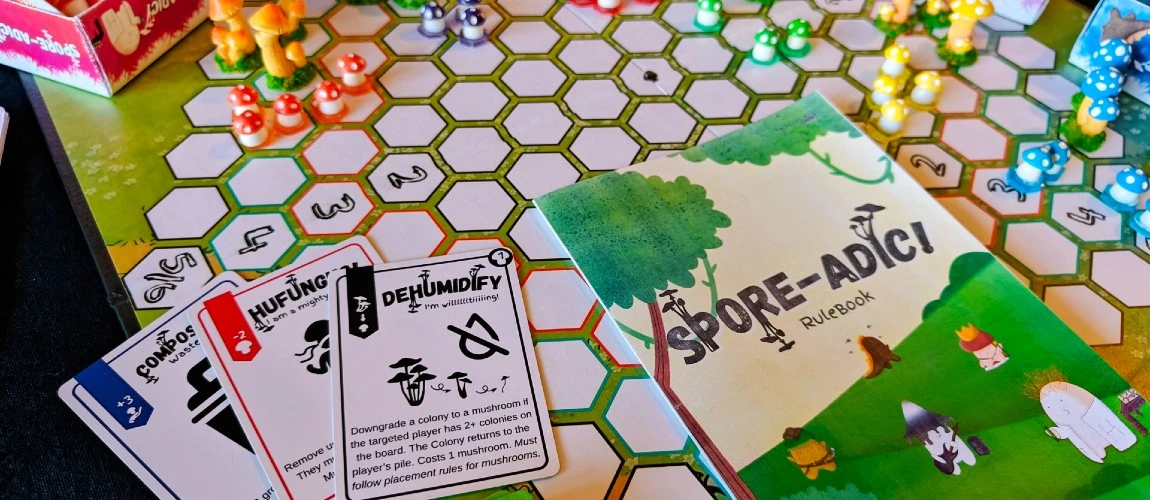
As you start to clean up the design and game elements, the errors that do remain - misaligned imagery, mismatched colors, grammatical errors - become more and more evident. It's not that they're bigger problems relative to any that have come before; it's that they're the problems that remain as everything around them has been cleaned and polished.
Think of it like a really dirty window. Yes, it's a window, and it functions like a window. If you clean the window but leave several dirty spots or even reveal a crack, suddenly those stand out much more than when the window was dirty. The same happens with games.
Now, with all that said, here's the really tricky part for designers: those issues that now seems huge to playtesters? Yeah, they seem small to us. Maybe even insignificant, as in "I'll deal with it before we get to the final version." We've been so deep into the game design and development, solving dozens if not hundreds of problems and issues along the way. By the time we're nearing production we may be aware of those little niggling things that we haven't finished yet, but having been on the entire journey of the game they seems like such a small piece. I'll call it the "Uncanny Mountain" - the closer we get to the production version of the game, the stronger our adoration of the game in its current state becomes, to the point we often overlook or miss small issues that would be glaring to our playtesters.
So as a designer, it's my job to try and squash all those little bugs and come down from my Uncanny Mountain before my playtesters find those issues. The fewer of them they find, the better their experience with the game will be. Even spelling mistakes can seem big to a player, who thinks, "How could they miss something that simple? If they missed that, I wonder what else they missed?"
My recommendation: as you near blind playtesting, slow down. Take a step back and even away from your game. Switch to another game, and give yourself a week without looking at the one you've been focused on. After about a week, then come back to that game and try to look at it with fresh eyes, the way a first-time player would look at it. Think about how they'd perceive the game, and read through the instructions and materials with intentionality: as if you'd never read them before. Don't just recite what you've already written as you read it. Don't dismiss the layout of cards at a glance. Look at every details - top to bottom, soup to nuts. Go piece by piece, regardless of how long it takes. Will you still miss things? Sure. We're only human. But the fewer tiny errors are missed, the more your game will feel cohesive and player-ready, and the less of that Uncanny Valley they'll have to experience.
Happy gaming!