Dev Journal
Square Pegs into Round Holes
When to give your games - and yourself - a break
Mar 12, 2026
Some games just flow: from ideation through to design on to testing and straight into production. Fast, easy. Like it was meant to be in the world. Other "games" never make it to the game phase: it's an idea, and it's a fun concept, but maybe there just isn't a good way to make it into a game - not all ideas are meant to be games, as some really bad games clearly demonstrate. And some games just take a really, really long time to go from stage to stage. To craft all the various ideas and mechanics and pieces into a cohesive experience while always retaining the fun.
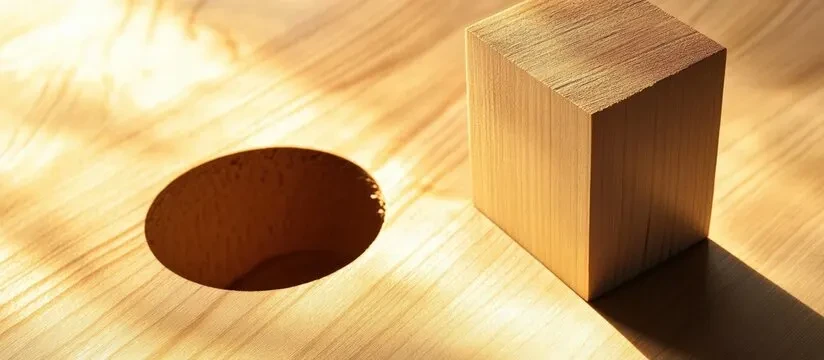
It would be great if most games just flowed, but unfortunately, the majority of them fall into the last category of needing a long runway to get from start to finish. And along that way, we can often run into an issue where one small piece just refuses to click. Maybe it's a particular mechanic that just feels clunky. Maybe a rule that feels intuitive but is harder to write down concisely than quantum physics. Whatever it is, it's a very common experience in game design to run into these stumbling blocks and do our best to force these square pegs through round holes to get to the finish line.
As critical as determination and dedication are to actually bringing a game to life, working through a problem sometimes means taking your time to work around it rather than literally boring a hole straight through it. If something isn't working and we're pounding away at it, we need to take a step back and let ourselves breath. Give the idea and the problem time to rest and live with it for a while, without trying to resolve it. The more we force things to try and just "work," the worse the result often is (as evidenced by my many failed attempts at painting).
When we give ourselves and our games some time and space, we can often see that it's not the specific issue we're working on that's the problem. Maybe it's something else that comes before, or a goal that we're trying to get to that doesn't work with everything we've already set up. Or maybe it'll work fine, but we're just too hyper-focused on the way we thought it should work that we can't see how it really should work.
Running into and being unable to resolve these problems immediately or with days and days of dedicated focus isn't a failure on our part. It's just how things go. It's a part of the process, and it's one that we have to be ready to accept. Not all paths through a maze leads to the end. Worse, these mazes can be mean. Not all of them actually HAVE an end. Not all problems have a solution, and not all games can be brought to the table. This is not a failure in creativity or imagination or capability; it's just game design. Moreover... it's life.
Working through a particular problem and finishing this particular game is only a part of the goal we have as game designers. The process of building and designing and working at these issues: that process is one of the most important goals we must remember. Even if you don't solve a problem and you have to put a potential game on the shelf, that's okay. The process you went through to get as far as you did can be plenty helpful for other games down the road. It's not a waste of time. It's a discovery that some things might not work the way you thought.
So the next time you're banging your head against a wall trying to make something work, take a step back and don't be afraid to rethink the entire game, or to just set it aside for a while and let the game - and yourself - breath.