Dev Journal
Temporary Alliances
How Frenemies can Make for More Interesting Gameplay
Mar 24, 2026
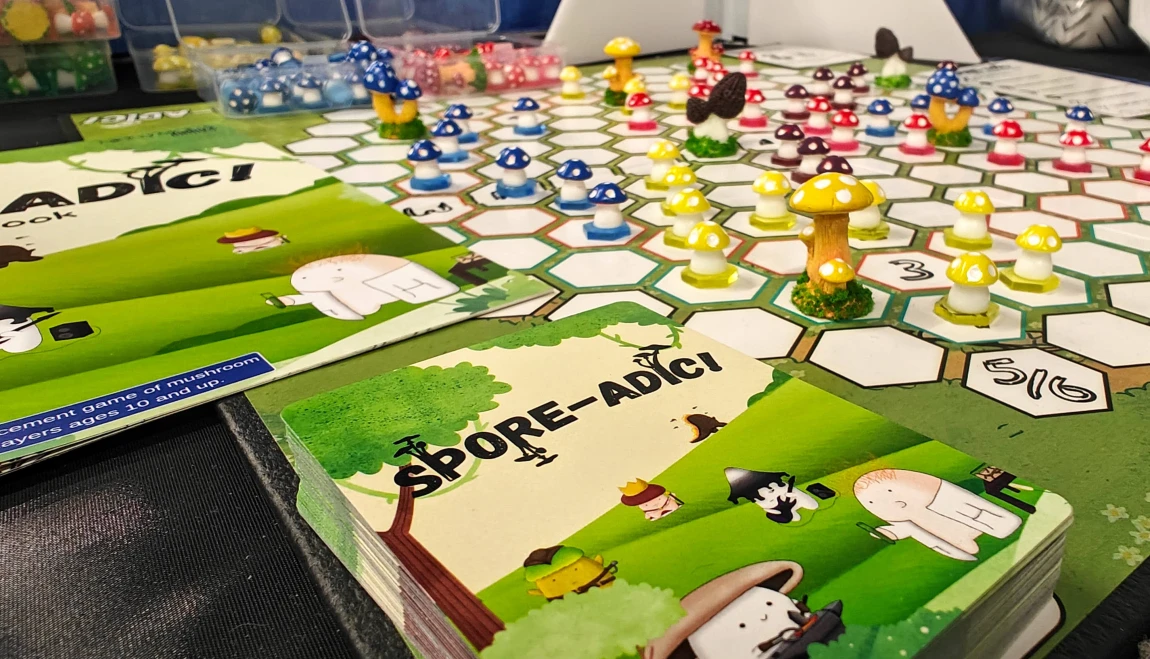
Competitive games are often fairly straight-forward in their, well, competitiveness. Score the most points, get the most resources, vanquish all the foes, never be invited back to game night, things like that. And while out-right winning is a common aspect of competitive games, temporary alliances and cooperation - or even purposeful point loss - can lead to a deeper strategic experience.
Back when I was a competitive cyclist, I saw this repeatedly and it made for a much more interesting race than just working with your own teammates, or flying solo. While you often had teammates racing in the field with you, it was sometimes hard to coordinate your moves. Maybe you'd make a break for it - jumping out front of the main race - and several other riders would go with you. At this point you had to make a choice: either you'd choose to work with the others who came with you so that you could all keep ahead of the main pack, or you'd fight one another, waste energy, and get swallowed up by the field shortly thereafter. Forming temporary alliances allows you to gain an advantage over those that refuse to work with others. If I give a draft to a rider from another team and in turn they do the same for me, it keeps us ahead of the pack.
In those races though, I'd have to keep my head in the game: those people with me in the break could at any moment try to attack me - meaning they'd speed up suddenly and try to leave me behind. Or maybe they'd try to use me up by sitting in my draft. These kinds of tactical choices made it so that not only was I physically exerting myself, I had to stay mentally sharp to read the tactics of the field and racers.
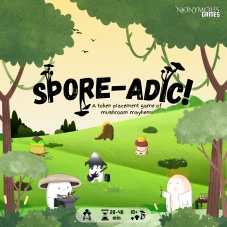
Personally, I enjoy when games do this as well. In a game like Spore-adic!, the play area itself is a limited resource. If you work together with other players, you can reign in a player who maybe got a few lucky cards, or a strategic advantage in how they deployed their colonies and grew their mushroom chains. Conversely, if a player is running out of room early in the game because people ganged up on them, you could choose to help them in order to keep the game going longer and gain more points. This is because in Spore-adic! if a player skips two consecutive turns the game ends for everyone, so it might be helpful to take an action that gives a player with limited options more space so that you in turn can have more time to build up more points. Or maybe you help them while hurting another player simlutaneously.
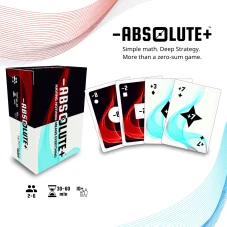
Absolute has a similar dynamic, in that you could give another player more points by swapping cards into a set that they've played that increases that set's score, but you do it so that you can gain cards that will benefit you down the road.
Being able to think about not only attacking your opponents, but temporarily helping them so that you gain a long-term advantage gives games a wider array of strategic options. So the next time you're working on a competitive game consider how your players could assist one another, why they might want to do so, and how this can increase the tactics and strategies available to the table. Sometimes, nice guys can finish first.