Dev Journal
House Rules
Make 'em, Break 'em, Fake 'em... Just Play
Sep 07, 2026
Writing rules for a game is probably the hardest part of game design. And the craziest part about it is that no matter how well you craft your rules, no matter how excellently laid out and planned and tested. Someone, somewhere, for some reason, will decide, "Meh, I like it better this way." Suddenly, your game maybe isn't what you intended. Maybe it's easier. Maybe it's harder. Maybe it's functionally broken.
And to all that I say... so what? Are they playing the game? Are they enjoying themselves? Then who cares?
Now, it's quite possible people will play a game wrong. They'll miscontrue a rule or maybe don't like the way the game plays with a particular mechanic. In essence, they're creating fan fiction of the game. For example: we enjoy the game Catan. Not a favorite, but it's fun. But initially we really didn't like it. The one thing that kept us from playing? The robber mechanic.
For those unfamiliar: if you roll a 7, the robber is activated. First, any player with more than 7 cards has to discard half (!!!) their cards, rounded down. Next, you can move the robber token onto any tile. If a player has a settlement or city next to that tile, you can take a card from them, and that tile no longer produces resources until the robber is moved.
This mechanic is way OP (overpowered). First, 7 is the most common number rolled in a 2d6 game. Second, it hurts players in multiple ways (lost cards, stolen cards, resource generation). Third, there's nothing that says you can't keep targeting the same player by just moving the robber to another tile next to the player's settlements. This mechanics seriously prolongs the game, and can unbalance play fairly rapidly. So... what did we do? We stopped playing with it.
It was a simple solution. Rolling a 7 just became a "miss," like no resources were generated in that turn. But that's it; no stolen cards, no discarded cards, no resource generation prevention. The game is also far less confrontational (which isn't some players' thing). The game didn't drag on and on as the robber merrily hopped from place to place. Now, I freely admit: we're playing the game wrong. There's too much tied to the robber to make it feel like it was accidentally added to the game. However, it allows us to play the game faster, without multiple punative effects stacking on a single player. Sure, the dice rolls can still lead to imbalanced play throughs, but that happens when you rely on a randomizing mechanic.
I know for a fact that people will alter the rules for our card game, Absolute. The zero cards are wild, and can only represent either positive or negative 0-10 (depending on the card type). And they can only be swapped for whatever value they're representing. All these restrictions means zeros have to be used in a pretty strategic manor. Well, maybe it's too hard for some people, and they decide you can swap the zero out for anything so long as the set is still valid? Or maybe they feel it's too easy and zeros can only be swapped for a single card of the same value? Maybe someone will think a valid set should just contain 2 cards rather than 3? That would technically break the game, but they might not notice and think it's easier/faster to play.
Some games purposefully leave some rules ambiguous. This is more common in lighter party games. The idea of those games is to generate fun, interactive moments, not to necessarily prescribe all the rules and contain the possibilities. So some games might not cover specific scenarios and leave the solution up to the players. Think of a classic game like Scattegories: you have to come up with 12 answers, one for each category, that starts with a die letter. Well, what if one of the categories is "Vacation Destination"? Someone might say, "Cancun," while others might say "Concord, NH." Now, people would most likely agree that Cancun is a vacation spot, but is Concord? Maybe, if you like the forested Northeast. The group can judge and go from there. The ambiguity itself can lead to interesting interactions and moments that you wouldn't get in a game that has very detailed rules.
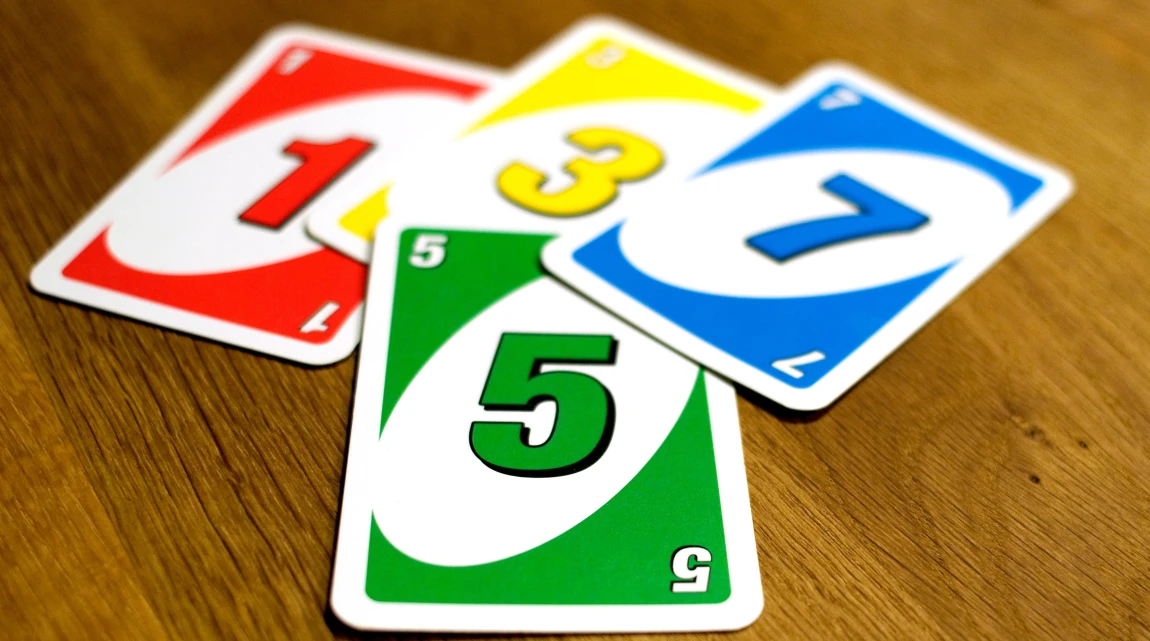
The most norotious game for rule making of course, is Uno. I don't think this game is played the same way in any two houses across this spinning globe of ours. And yet, it's still played, and it's still enjoyed (or in a lot of cases dispised). But every family seems to make that game into their own version, with rules that are passed on for generations. Was that the original intention of the designer of Uno? Surely not. But with millions of copies sold for decades, do we also honestly think people care? So long as everyone is having fun, what's the harm in making or breaking a rule or two?
Ultimately, we're here to have fun. We can reread the rulebook later.